Indian National Development Integration
Agriculture CO-OP Society.
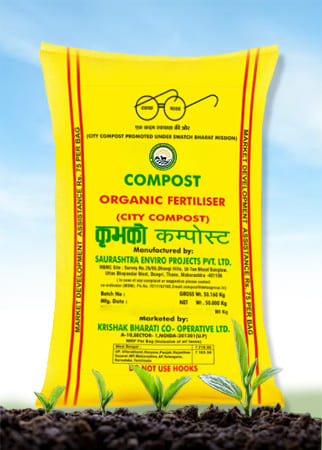
Indian National Development Integration Agriculture CO-OP Society Compost is manufactured from city waste including vegetables, fruits, leaves, crop residues etc. under controlled conditions into eco-friendly hygienic bio-stable humus-rich plant nutrients material useful for soil and crop health. Indian National Development Integration Agriculture CO-OP Society started trading of compost in 2010 with a view to improve soil health, Fertiliser use efficiency and soil productivity.
Compost is a humus rich dark brown to black material with no foul smell and neutral pH. It is free of any pathogen, weed seeds, glass, metal and wood pieces etc. Total minimum organic carbon is 12% with Nitrogen (0.8%), phosphorus (0.4%), potash (0.4%), moisture 15-25% by weight and C:N ratio less than 20. All heavy metals are within safe limits as per FCO specifications.
Compost adds life to soil by contributing in many ways briefly described below :-
Compost is a very useful organic manure without any side-effect. It can be used in all types of crops namely cereals, pulses, vegetables, fruits, commercial crops etc. to improve soil health and obtain desired quality produce. Farmers may safely use 5 to 50 bags of compost (50kg)/acre. Dose can be even higher in case of high-value crops like vegetables, medicinal, aromatic and fruits plants. After broadcasting in the field, compost need to be incorporated into upper 15-20 cm soil depth and mixed well with soil preferably before sowing of the crops. Compost can also be added during earthing–up of some crops like vegetables, sugarcane, maize etc. and mixed well with soil. Biofertilisers can also be mixed during compost application.
We empower farmers with premium fertilizers, pesticides, and seeds to enhance productivity, protect crops sustainably, and ensure long-term agricultural success.