Indian National Development Integration
Agriculture CO-OP Society.
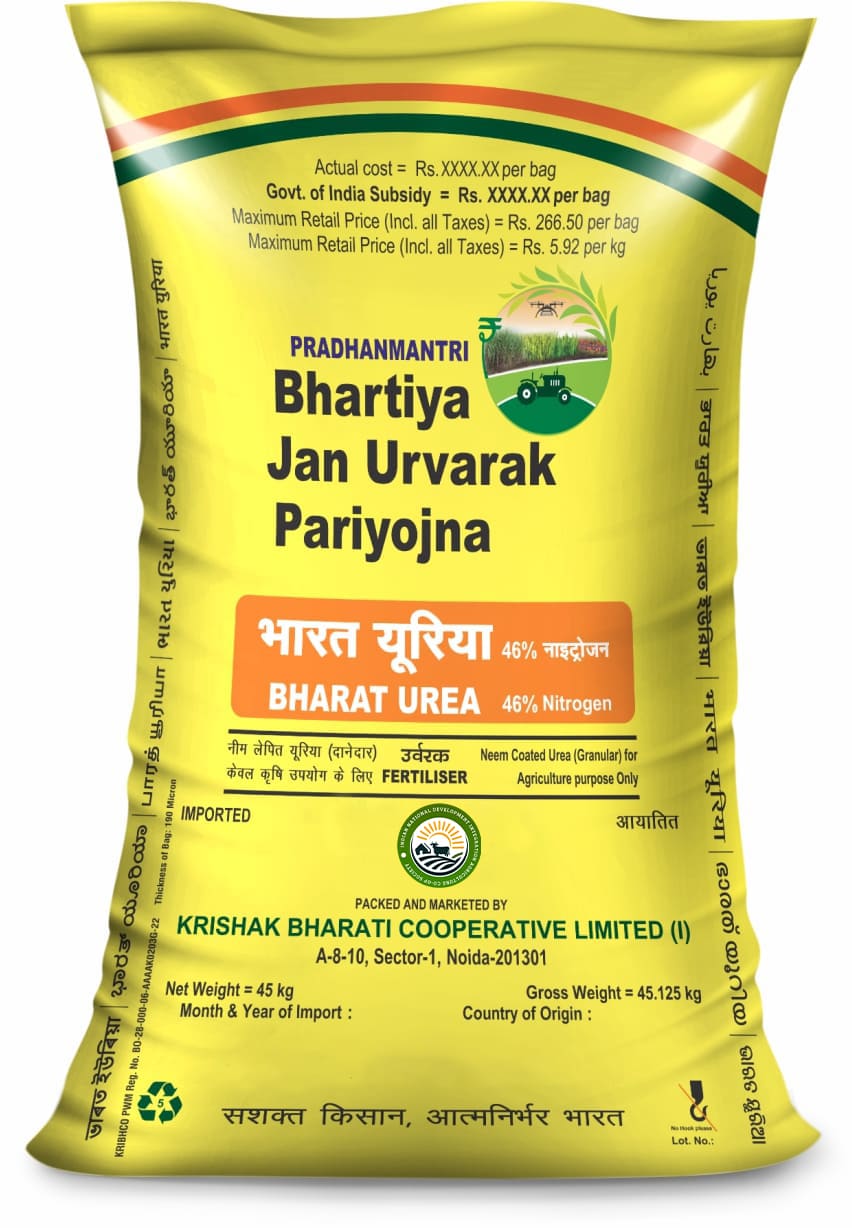
Di-ammonium Phosphate popularly known as DAP is a preferred fertilizer in India because it contains both Nitrogen and Phosphorus which are primary macro-nutrients and part of 18 essential plant nutrients.
Di-ammonium Phosphate popularly known as DAP is a preferred fertilizer in India because it contains both Nitrogen and Phosphorus which are primary macro-nutrients and part of 18 essential plant nutrients.
DAP (NH4)2HPO4: Fertilizer grade DAP Contains 18% Nitrogen and 46% Phosphorus (P2O5).. DAP is manufactured by reacting Ammonia with Phosphoric acid under controlled conditions in fertilizer plants.
It is a very popular fertilizer because of its excellent physical properties and nutrient content. It is free flowing, dust-free and does not normally give any storage problem. DAP is almost water-soluble and ultimately leaves acid effect on soils because of ammonia (NH4) it contains. DAP on incorporation into soil, reacts with water and gets converted into HPO4 and NH4. Ammonium (NH4) follows the same routes as in case of urea. Phosphorus in DAP is present in best available from (HPO4). Depending upon the soil reaction (pH), phosphorus exists in 3 forms which can be absorbed by plant roots. These are HPO4, H2PO4 and PO4. Phosphorus, which is immobile in soil, is not subjected to leaching losses.
| Parameter(By weight) | % |
|---|---|
| Moisture | 2.5 (Max) |
| Total Nitrogen | 18.0 (Min) |
| Ammonical nitrogen | 15.5 (Min) |
| Total nitrogen as urea | 2.5 (Max) |
| P2O5 | 46.0 (Min) |
| Water soluble(P2O5) | 41.0 (Min) |
We empower farmers with premium fertilizers, pesticides, and seeds to enhance productivity, protect crops sustainably, and ensure long-term agricultural success.